Saturday, April 12, 2014

Dogs and ham

One of Leonore's language students brings her incredibly cute little dog with her. The dog makes a beeline for me because I always greet her with a treat — a rolled up smoked mozzarella and proscuitto delight from Costco. What dog wouldn't like that?

Well, maybe a Moslem or Jewish dog. But dogs are considered unclean by Moslems, so maybe there are no Moslem dogs. There are certainly Jewish ones (leaving aside the whole circumcision thing).

An old insult for Jews in Medieval England — or at least, in historical novels — was "dog of a Jew". I guess a Jewish dog would be a Jew of a dog.

Today's rambling thoughts brought to you by Working on Taxes, 2014 edition.

Friday, April 04, 2014

MPAD Memoirs

Which would be a nifty title, but I don't know what the title will be.

MPAD = Mission Planning and Analysis Division, simply the utterly most important and core part of what was then NASA's Manned Spacecraft Center (later renamed Johnson Space Center) in (south of) Houston. (Others who worked there, but not in MPAD, might disagree.) (They'd be wrong.)

Recently, a former MPAD coworker of mine from the days of the Apollo Project contacted me to say he was interviewing people who worked at MPAD at the time of the moon landings. He's my age and also retired, and he drives around the country quite a bit. He arranges his trips so that he can drive through the cities his old colleagues (and we are all old!) now live in and interview them. Once all the interviews are done, he'll figure out how to weave them together with the story of Apollo. The result will be a fairly substantial book.

He was in Denver yesterday, and we had a very nice and quite long meeting. Mostly, he was interviewing me about my life before, during, and after Apollo, but we also spent some of the time talking about the other people who were in MPAD back then. He'll probably want me produce the e-book and print versions of the book and design the cover.

Tuesday, April 01, 2014

It’s not the Christian Bible, damn it

It's silly of me to be annoyed by this, given that I'm an atheist. Nonetheless it annoys me considerably.

Thanks to the Noah movie and to today's date*, there has been a spurt of references to the Bible in the online places I frequent. I keep seeing the Flood and Psalms, both in the Old Testament, referred to as being in the Christian Bible.

No, sirree. They're in the Old Testament, a.k.a. the Hebrew Bible.** The fact that Christians have incorporated the OT into their religion is irrelevant. Moslems have incorporated much of the OT and the NT into their religion, too, but that doesn't make those two books part of the Koran.***

-------------------------------------------------------------------------

* I'm referring, of course, to the obnoxious "joke" that today is atheism's holiday because "The fool has said in his heart, there is no God."

** Yeah, yeah, I know, Pentateuch. As far as I'm concerned, the whole shebang counts.

*** Maybe it does to Moslems, who I gather consider the OT prophets and Jesus to be Moslems, but that's just weird, and I haven't encountered any Moslems in the online places I was referring to.

Wednesday, February 19, 2014

Continuum’s Height Problem

I like the TV show Continuum and its twisty time-travel switcheroos. I'm always a sucker for those, in any show. I wonder how the various mysteries will be resolved, assuming they are all resolved when the show finishes its run. But the one mystery that I find annoying rather than intriguing is Alec Sadler's height.

In the present, he's about 20 years old. He's shorter than almost everyone else, including Kiera. In scenes set in the future, he's in his mid-eighties. Unless future medicine has solved the problem of people getting shorter in old age, he would have lost some height since his max height. But he still towers over almost everyone, including Kiera. Maybe growth spurts happen after 20, but they must be rare.

There are other time travelers, besides Kiera, and none of them seems unusually tall or short compared to people of today or the future. So unless travel itself does something weird to people's heights, Alec's height is a msytery.

Thursday, February 13, 2014

Thor Didn’t Thunder, and Oblivion Should Not Have Been Consigned to Oblivion

I keep a lookout for the cable appearances of big-budget sf/f/h movies that I skipped in the theaters. Then I record them to watch while exercising.

After watching such a recording, I sometimes regret that I didn't see it on the big screen, but more often I'm glad that I saved the money and time. I can’t say what effect watching a movie while grappling with a heavy weight has on my judgment, but presumably if it does induce a bias, the bias is the same for all of the movies I watch while exercising.

Recently, I watched Thor and Oblivion this way. Because of how the two performed in theaters, I assumed I’d like Thor and would not like Oblivion. It was the other way around.

Thor’s big budget shows. The sets are lavish (but at the same time absurd and laughable in the Asgard scenes) and the CGI is impressive. But the action scenes are murky, and it’s hard to see what’s supposed to be happening. The scenes begin as set pieces, then there’s some stylized movement and much blurred stuff, followed by a set-piece resolution. The acting is adequate, but the dialog ranges from dull to silly to — in the Asgard scenes — embarrassing. There’s little to the movie. It’s better looking and acted than the awful imitation that appeared on the SyFy Channel but just as empty and aimed at the same pubescent audience. Thor’s box-office success is depressing and disappointing.

Oblivion is a very different matter. It also had a big budget, but that budget was put to better use. The CGI is excellent (albeit with one brief exception) and the sets are completely believable. The acting is quite good, and that includes Tom Cruise, who for decades now has been in the unfortunate and puzzling position of having to keep proving his acting ability. One big problem with the movie is the idea that clones, despite being complete human beings with the normal human range of emotions and needs, are interchangeable when it comes to love. The other problem is that the story line is a combination of a number of stale, old science fiction plots instead of something original. But they have been sewn together competently, and the result is entertaining and believable. I imagine that for audience members who haven’t read much sf, it all seems brilliantly original. The movie deserved much better treatment at the box office, and it certainly should have been a far greater success than Thor.

Sunday, January 26, 2014

Blogging about Atheism & Reading about Atheism: The Atheist Blogroll

I started this blog in September 2006.

At the time, I planned to use it write about my writing. In part, I thought it would act as a spur to make me write more because I’d be reporting on my writing progress and I’d be embarrassed to have to report how little I had written. Hence the title and the quote from Trollope at the top. That doesn’t seem to have worked too well. If it had, I’d have written quite a few more books in the last seven and a fraction years than I have.

On the other hand, I came to see the blog as a convenient place to express my opinions about all sorts of things — books, politics, movies, petty annoyances, major annoyances, etc. Of those, the posts that seem to get the most attention are the negative reviews of popular movies. Here I am, trying to set the world right with my insights and wisdom, and the strongest responses I get are hostile ones from people who call me names for trashing a movie they loved. It has been a source of great joy to me. I must make an effort to see more bad popular movies.

But that’s all beside the point.

One topic I don’t blog about (not often, maybe not ever) is atheism or the related topics of religious belief and church-state separation. That’s odd, because atheism has been an extremely important part of my life, and I have strong opinions on separation, strong enough to be offensive to some of my fellow atheists. For example, an essay of mine titled Should Atheists Celebrate Christmas? has earned me more hostile responses from atheists than from theists. (Probably because it’s not so much an attack on the silliness of Christmas as it is upon the silliness of atheists who celebrate it.)

That’s not to say I don’t read atheist blogs. When such blogs started appearing, years ago, I began following them eagerly. The number of such blogs has exploded in recent years, and I haven’t been able to keep up. I still follow the ones I became aware of early on, but I can only sample the others from time to time. Other than following links from blogs, how is one to find the pool to dip into?

A brave blogger named Mojoey has taken up the task. He maintains a blog called The Atheist Blogroll. He vets the blogs he includes, and he removes inactive ones. (This blog, A Blister to My Eye, is now included in his blogroll.) I expect to use his blogroll to discover good blogs to follow. Just not too many, I hope.

I do plan to blog more about atheism, religion, separation, and related topics in the future.

Partly, this is because they are more on my mind than ever as Leonore and I spend more time working on our book about our atheism, which we hope to have done and published before the end of 2014.

Partly it’s because those topics are never far from my mind, no matter what book I’m writing, and I have strong opinions on those topics, and this is my blog, and it’s where I express those strong opinions in strong terms.

I just remembered reading that there will be a flood of big-budget religious movies coming out this year, including one about the Flood. I wasn’t planning to see any of them, but now I think I will — not because I’ll like them, but because I’ll hate them, and it will be a fine opportunity to combine blog posts slamming religion and bad popular movies at one and the same time.

The comments should be fun.

Wednesday, November 06, 2013

Here’s how badly Colorado’s secession movement failed

In yesterday’s election, 11 Colorado counties voted on whether they wanted to secede from Colorado and form a new state, North Colorado, a.k.a TeaPartyGunNutFrackitupiStan.

Not all the votes have been counted, but the results so far show that five of those counties voted solidly in favor of secession, while the other six voted just as solidly against it.

Some people have fallen for the standard Republican trick of analyzing voting results in terms of square miles. In this case, that sleazy trick becomes comparing numbers of counties on one side vs. numbers on the other. When you look at it that way, you might think that secession is a powerful force out here in the Mountain West where men are men and fracking injections are wonderful for the environment. Five counties want to secede! And all of them are filled with sunburned, Stetson-wearin’, squinty-eyed, gun-totin’ manly men. Also their wives and hosses and little cowboys and cowgals.

Wal, hold on a jest minute there, buckaroo.

I put the latest election results I could find into a spreadsheet and did some simple arithmetic. Not all of the vote counts are final, but I should think they’re fairly close to complete by now.

Here’s what I found.

If you add up all the Yes and No votes in the 11 counties, you get 91,377 votes cast. We only had two state-wide issues on yesterday’s Colorado ballot, so I chose one of them, Amendment 66 (which failed, damn it), as a way to get the total statewide vote cast yesterday. The Yes and No votes on Amendment 66 total 1,268,889. That means that the total number of Yes and No voters in the 11 counties voting on secession only amounted to 7.2% of the total statewide vote. Hmm. Lotsa square miles out there on that rolling, highly frackable prairie, but not a lot of voters.

Now, if you add up all of the No votes in the 11 counties — i.e., the votes against secession — you get 50,293. All the Yes votes add up to 41,084. As percentages of the 91,377 votes cast on the secession issue, that gives you a vote of 55% to 45% against secession.

I call that a resounding defeat.

Saturday, October 26, 2013

There is lots of linguistic atrocities out there

The latest one to sweep across my part of the English-speaking world is the use of a singular verb with a plural subject. This mostly shows up in the form of "there is" instead of "there are" -- "there is lots of ... "

What can one do? Nothing but look down one's nose and sneer. It's hard for me to look down my now at people because I'm short. Fortunately, I have a large nose, which helps.

Friday, September 27, 2013

Elementary, Season 2, Episode 1

The first episode of Elementary's second season was a good Elementary episode but not a great one. That still makes it superior to almost everything else on TV.

There wasn't much reason to set the episode in London, other than the interesting character stuff with Lestrade as a somewhat different kind of addict and Holmes trying to get him off the habit.

There were wonderful shots of famous scenery, and the bit in the taxi where Watson, the visitor, looks around eagerly at all the famous sights, while Holmes the native, stares into space, lost in thought, ignoring all of it, was cleverly done.

Since I have to say something negative, I'll express annoyance at Holmes, for the second time in this series, pronouncing "cache" as though it were "cachet". Surely Holmes would know better. Also, the absurdity at the end when Mycroft wishes him a pleasant trip "back to the colonies." WTF?

Thursday, August 22, 2013

Dr. Daniel Dvorkin

To quote Leonore:

It's celebration time! As of about 3:30 PM today, our only child, Daniel, 44 years old, is now Daniel Dvorkin, PhD, with a doctorate in Bioinformatics from the University of Colo. Denver/Health Sciences Center. Needless to say, this was a very long time coming. It's the culmination of five (or six?) years of hard, hard work on the PhD alone. / We love you, Daniel, and are so, so proud of you! We are such very fortunate parents to have a son like you: so smart, so sweet and kind, and so very hardworking. Now it's on to great things in the world of scientific work!

Monday, July 29, 2013

True Blood and Nora’s Accent

We watched last night's True Blood this evening On Demand. It was a great episode, with some nifty twists, except for one minor detail. We learned that Nora was an English noblewoman who became a vampire in the 17th Century. Hence her very upper-class English accent.

Which didn't yet exist at that time.

To which some will say, "You can accept vampires and all of the other magical creatures on True Blood, but you cavil at that little historical error?"

Yes. Because when fiction is set in an unreal world, all the tiny details have to be correct in order not to destroy one's willing suspension of disbelief. That's true for all fiction, but it's especially true when the very setting contradicts reality.

More than that, the grainy, gritty details of the fictional reality have to be very sharply real in order to make the fantastic world continue to seem real.

That minor details is not so minor, at all.

Tuesday, July 23, 2013

Abraham Lincoln, Vampire Hunter – the definitive historical movie about Abraham Lincoln!

I finally had the chance to watch "Abraham Lincoln, Vampire Hunter" on DVD. I had missed it in the theaters, through which it zipped fairly quickly. I gather it was a commercial flop.

I don't know why it flopped. It was loads of fun and extremely well done. It had its problems, such as the lack of facial resemblance between the actor and Lincoln, despite the hours he spent being made up for the part every day before shooting began, and his lyric baritone voice vs. Lincoln's reportedly high, nasal one. There were moments where I had to strain a bit to hold onto my willing suspension of disbelief, and some of the over-the-top action scenes (e.g., the fight on the backs of the thundering herd of horses) went on too long, but those were relatively minor problems.

It was a great humans vs. vampires adventure romp fairly well integrated into actual history. Even with the vampires insinuated everywhere, it gave me a far more convincing feeling of the time and place than the lauded and quite bad "Lincoln" with Daniel Day Lewis. I saw Lincoln in the theater and regretted paying the money and was relieved when it finally ended. I wish I had seen this one in the theater and I was sorry when it ended.

Wednesday, June 12, 2013

Smoky Days and Nights

Ugh. Going to bed with the windows closed and the air conditioning on, because of the smoke from the forest fires. Our eyes are red and our throats are irritated.

And it's going to keep getting worse, every summer. The annual forest fires will die away when there's nothing left to burn in the mountains. Surely there won't be many people living in the mountains, once that happens. There'll be little tourism, summer or winter. The rare heavy snows or rains will mean serious mudslides and flash flooding. Denver won't be covered by smoke from fires then, but it will be covered by dust. Extreme water rationing will mean no more lawns, and we'll all have cacti instead of trees, like Arizona.

Of course, the important question is, what will this mean for the value of our house?

Monday, June 10, 2013

Star Trek: Into Lameness

We finally saw the new Star Trek movie today. Cumberbatch dominated the movie, unsurprisingly. Lots of action and extraordinarily believable special effects. It was entertaining and had some occasionally good dialogue. However, take away the action and the special effects, and there wasn't much left. Even Cumberbatch's presence couldn't add substance to the movie.

We really liked the first of the new ST movies. I'm willing to make allowances for this one because #2 in a series is usually lame and #3 is usually good. So I was expecting a touch of lameness. Nonetheless, I was really hoping for a movie that wasn't aimed at 15-year-old boys.

Maybe #3 will be good.

Friday, May 31, 2013

The fluidity of e-books

This is cool.

One of the books on my Kindle is Battle Cry of Freedom, a wonderful history of the Civil War that Daniel recommended to me highly. I just got a notice from Amazon that that edition has been updated; the e-mail included instructions for getting the update on my Kindle.

No, the ending didn't change. The maps were updated. Those maps were the one thing that was poor about that e-book edition. I don't know if I'll ever reread the book, but if I do, or if I look into it for reference, I'll have the better maps.

Some people have said that this changeability is a drawback to e-books. To my mind, it’s one of their many strengths.

Wednesday, May 22, 2013

Dr. WTF?

We finally got the chance to watch Saturday's episode of Dr. Who. We had missed it because we were out of town.

It started out promisingly, but that didn't last. Sadly, this was one of those episodes where Dr. Who turns into Dr. WTF? The people writing Dr. Who nowadays have come up with some wonderful episodes, but they've also produced some exceedingly bad ones, and I think the latter kind tend to happen when they forget that they're writing fun, silly adventure stories and try to create Art.

I think that as a general rule, writers should never try consciously to create Art. The result is almost always not only rubbish, but, even worse, the kind of rubbish that makes you wince.

Thursday, May 16, 2013

The World According to End-of-the-World Movies

Yesterday, I was exercising to a couple of SyFy Channel end-of-the-world movies. Both involved stuff raining down on Earth and destroying cities -- meteors in one case, technobabble electrical phenomena in the other. In both movies, the hits were random, sudden, numerous, and unpredictable. In both movies, the main characters escaped death by running madly while zigging and zagging. Occasionally, one would yell, "Look out!" and pull the others in a different direction. This tactic did not work for all of the extras running around in the background.

From one of the movies, I learned that, despite walking for days on end in a semi-post-apocalyptic landscape, the pretty female had some secret way to keep her hair clean and her makeup fresh, and the rugged male lead was able to stay clean shaven. (Maybe he was a eunuch! No. That would have been a very different movie.) On the bright side, he wasn't wearing stupid facial stubble. His hair stayed clean, too. So did the clothes on both.

In the same movie, the female lead was wearing high heels when rescued by the male lead. After walking for days and then finding themselves in semi-abandoned Los Angeles, they didn't take the time to get her a pair of sensible running shoes for the remaining days of walking.

Monday, April 01, 2013

The Abominable Mr. Selfridge

We watched the first episode of the new Masterpiece series "Mr. Selfridge" last night. I won't bother watching any of the rest of it. Mediocre writing, distasteful characters, inept acting, uninteresting story.

My advice to the Masterpiece people: Don't pander to American audiences by including American characters, and certainly don't focus on the American characters. You've done very well in the past with your period tales of upper-class English families in expensive clothes and surroundings. In any case, and above all, focus on the story and hire the best writers and actors, and please don't reuse the gang responsible for this failure.

Friday, March 29, 2013

Get the government out the marriage business?

So now the right wingers are adopting a seemingly libertarian stance on marriage and saying that the government should get out of the marriage-sanctioning biz entirely and leave that up to churches and synagogues (maybe some of them add mosques, but I'm skeptical).

Fine, if they also mean that all the laws granting married couples any kind of special status compared to single people will also be removed. I'm sure they don't mean that, at all. I'm sure they just want to sucker libertarians*, yet again, with the aim of making marriage even more restrictive than it is now.


* Is it in the DNA of libertarians that they're so often so easily suckered by the right wing?

Monday, March 25, 2013

Imitation may be the sincerest form of flattery, but plagiarism ain't

Someone sent me an e-mail alerting me to a blog post about vampires that lifted a lot of text from my essay about vampires.

A link to my essay would have been nice. A polite request to use some of the text, with attribution, would have been even nicer.

Unfortunately, I don't see any contact information on that blog or even a way to comment.

Hmph.

Friday, March 15, 2013

Political Prognostications Are Worth the Electrons They’re Written with

But they’re so much fun.

Listening to a bit of the speeches and interviews at CPAC on NPR this morning, I'm suddenly reminded of the conservative movement in the early 1960s, during part of which time I shared a college dorm room with the president of the Indiana University chapter of Young Americans for Freedom (who was a nice guy, when we weren't discussing politics).

My roommate and the other young conservatives — which seemed like a real oxymoron to people like me, back then — were rallying behind Goldwater, and they were utterly convinced that if only Barry could win the Republican nomination in 1964, the whole country would flock to his banner. Because, as they knew in their hearts, the American people are fundamentally right wingers. If they had been correct, then the slogan of the Goldwater campaign during the 1964 election, “In your heart, you know he’s right,” would have been a brilliant one.

They also assumed that the Johnson campaign would be incompetent and wouldn’t exploit all the weak spots in Goldwater’s positions. Obviously, they were wrong on both counts.

No, Goldwater didn’t lose in a landslide because of a supposedly unfair Johnson campaign commercial about a little girl picking flowers as the nuclear bombs start going off. That commercial struck a lot of us at the time as being right on the money, but that’s irrelevant. Goldwater would have lost in a landslide even if that commercial had never run.

Because Goldwater mellowed a bit in his old age and condemned the Republicans for their homophobia, people who don’t remember 1964 think that Goldwater wasn’t such a bad guy, after all. Wrong. He was correctly seen as a raving loon. At the very least, if he had won, his administration would have been filled with raving loons he would have been unable to control.

Now I’m beginning to think that maybe Rand Paul will be the GOP nominee in 2016, instead of any of the familiar names the pundits are backing, and that the result will be another Democratic landslide similar in magnitude to 1964.

Monday, February 25, 2013

The Surprising Benefits of The Surprising Benefits of Being Unemployed

Ten years ago, during a period of stressful, worry-filled, and embittering unemployment, I wrote an essay about the experience, titled The Surprising Benefits of Being Unemployed. It was an attempt to talk about unemployment in a tongue-in-cheek way, and it served as therapy for me.

I put the essay on my Web site, although I worried that other unemployed people would see it there and would find it upsetting. After all, there’s nothing humorous about losing your source of income and not knowing when or even if you’ll secure another. Reading an essay that seems to be making light of that situation could result in anger and could deepen the depression that inevitably accompanies being unemployed.

Fortunately, it had the opposite effect: It cheered people up. Over the years, I’ve received a steady stream of e-mails from unemployed people thanking me for writing the essay and saying that it helped them cope with being unemployed. Some of the e-mail correspondences went on for years.

For me, following the writing of the essay, there were more alternating periods of employment and unemployment. I had more thoughts on the subjects of unemployment and job hunting, and I expanded the essay into a short book with the same title. People buy copies of the book from time to time, although the number of hits on the essay is far greater than the sales numbers for the book. When you’re unemployed, free is obviously better.

Out of curiosity, I started tracking the number of hits on the essay and found that it was a fairly reliable leading indicator of the economy, so I created the tongue-in-cheek SBOBU Economic Index. I haven’t updated the data in a while, however.

Today, I got another e-mail thanking me for writing the essay. The writer said she had just accepted a job offer after being unemployed for seven months. I realized that I’ve been getting very few of those e-mails lately. This is evidence either that the economy has improved or that the essay’s supply of comforting humor has been used up. I hope it’s the former.

Friday, February 15, 2013

Sir Arthur Conan Doyle’s descendants refuse to give up

This puzzles me.

When I sold my Sherlock Holmes novel to Dodd, Mead about 30 years ago or so, lawyers for Conan Doyle's daughter (I think it was) contacted Dodd, Mead and threatened to sue if the book were ever published; they claimed control over the characters. The then-head of Dodd, Mead, who I think was a member of the Dodd family (I always think of him as Junior Dodd), told them to go ahead and sue. They backed down.

If they didn't think they were on solid ground 30 years ago, how can the estate think it has grounds now?


As an aside, I found their objections to my novel particularly laughable. They asserted that Conan Doyle would never have approved of my combining Sherlock Holmes with space travel and time travel. Given that Conan Doyle wrote a fair amount of what we now call science fiction, I wonder if his descendants had actually read much of his works.

Wednesday, February 13, 2013

College alumni in a bar

Occasionally I get e-mail from the local chapter of the Indiana University Alumni Association announcing gatherings. The latest one invited me to a local tavern to watch a televised IU basketball game in the company of a bunch of drunken alumni. Woo hoo.

The most truly world-class organization at IU is the opera school, whose graduates typically head straight to the Met and other great opera houses. The opera school also puts on wonderful opera performances on campus. Now, if the alumni org invited me to a local tavern to watch a live televised performance from the IU opera school, I might be interested. But I'm not going to hold my breath for that.

Monday, February 04, 2013

A little knowledge is a dangerous etc.

A little knowledge is a dangerous etc.

Talking Points Memo has a brief note about the announcement that the skeleton recently found in England most probably is that of Richard III. The TPM news item is headed "Tear-Falling Pity Dwells Not In This Eye" — a line uttered by Richard in Shakespeare's play, Richard III. In the note, TPM refers to Richard as "the notorious Richard III".

Which makes me suspect that David Kurtz, who apparently wrote that TPM item, has drawn his knowledge of Richard from Shakespeare's version of the man. Shakespeare, who was writing during the reign of Elizabeth I, the granddaughter of Henry VII, the man who ended Richard's reign and life at the Battle of Bosworth Field. Shakespeare, who understood politics so well and understood the value of not pissing off Elizabeth by casting doubt on the rightness of her grandfather's violent takeover of the country.

Wednesday, January 30, 2013

An exciting morning at Starbucks

I dropped Leonore off at the campus this morning. She had only one tutoring student today, so I went to a nearby Starbucks to have bad coffee and read a good book. A young man came in with his bicycle, bought something, and left. Shortly after, he came staggering in asking us to call 911. Someone had stabbed him and stolen his bicycle.

A customer who seemed to know what he was doing sprang to help. He got the guy's t-shirt off, revealing a bleeding hole in his side, helped him to a chair, and pressed a towel to his side. Blood, blood, blood. Police and local security guards showed up, including the campus police for some reason. Lots of phone calls and stuff. Ambulance showed up. The medics helped the guy to his feet and walked him out to the ambulance. I don't know why they didn't do something for him there. He was moaning and saying he couldn't breathe. I assume his lung had been punctured and/or was filling with blood. There wasn't as much blood as I would have expected; there also wasn't any bubbling from the wound.

I heard someone say that the victim warned the man helping him that he had Hep C. There was blood on the chair, on the small table he was sitting at, on the floor ...

The police put yellow Crime Scene tape outside and had the barristas lock the door. They took statements from everyone. It all took a while.

So the poor guy has Hep C, a serious wound, and his bike is gone.

Friday, January 18, 2013

If only TV writers knew even a tiny bit of history

Oh, this pisses me off.

NBC will be doing a new series titled Dracula:

The series centers on the famous vampire, who poses as an American entrepreneur called Allen Grayson. He travels to 1890s London, where he attempts to "bring modern science to Victorian society."

You dumb shits. Where do you think modern science began? Why don't you read up on the attitudes of the Victorians toward everything new and interesting, instead of relying on absurd Hollywood stereotypes?

Thursday, December 13, 2012

Pacific Rim

Based on the trailer, the new movie Pacific Rim will do well if there are enough 13-year old boys out there.

The gimmick seems to be that giant alien monsters from another dimension emerge from inter-dimensional portals deep under the Pacific Ocean and then come on land to attack humanity. The only effective weapon we have against them is equally giant, remotely controlled robots that can have face-to-face punchouts with the aliens. This is obviously far more effective than the most destructive rockets, bombs, etc. that mankind has developed.

Tuesday, December 04, 2012

Dr. Sleazevago

It’s odd to watch a movie again, decades after first seeing it. You’re surprised by the big chunks of it that you don’t remember at all as well as the scenes that you do remember quite well.

We just watched Dr. Zhivago, the original one with Omar Sharif and Julie Christie, which we last saw back in the 60s, when it first came out. I remembered it the way it was received at the time, as a big-screen epic romance with lots of vast, snow-covered Russian landscape — which was actually Finnish, Canadian, and other landscape, because the Soviets refused to have anything to do with a movie made from a novel by an author who was persona non grata.

What I didn’t remember was what a dirtbag Yuri Zhivago was. Lara, his mistress, is only slightly better. Rather, she has a slight excuse for her behavior — her experience when she’s 17 — whereas Dr. Zh. has no excuse at all.

Just like two morally depraved movies that I despised, The English Patient and Like Water for Chocolate, this epic romance is really a celebration of sleaze. I have an unpleasant taste in my mouth.

Sunday, December 02, 2012

Aborted Flight

Save your money and your time. Flight aborts on takeoff. It never reaches cruising altitude. Its engines sputter and flame out. Skip this one and catch a different flight.

When the airplane piloted by drunk, high-on-cocaine Whip Whitaker (Denzel Washington) takes off, the passengers are told that the flight will take just under an hour. Perhaps if the movie had been edited down to one hour, it might have been bearable. As it is, the official running time of two hours and 18 minutes can’t possibly be correct. The movie seemed to go on forever — or at least until it ends abruptly with an anticlimax.

As we know from the trailers, their flight will be much shorter than that. Wisely, the trailers focused on the scenes of the plane flying upside down just above the ground and then crashing in a field. That’s the most entertaining part of the movie. No, it’s the only entertaining part. If the movie had ended at that point, with everyone aboard dying in the crash, it would have been no more unsatisfying than the actual ending and slightly less disappointing.

Don’t be fooled by that trailer. This isn’t a picture about airplanes or pilots. It’s a story about alcoholism, and it’s no Days of Wine and Roses. Unlike that classic movie, it doesn’t even have a good theme song.

Whip Whitaker drinks heavily and constantly, snorts cocaine, smokes feverishly, denies that he has a problem, and repeats the process over and over and over … There is no subtlety to the story. The writing is inferior, rising occasionally to pedestrian. With the exception of Don Cheadle’s excellent depiction of a slimy lawyer, the acting is barely adequate. Denzel Washington, normally such a fine and riveting actor, is severely out of place here. His understated style is exactly wrong for the character. He should be flamboyant and larger than life until his moment of truth. Instead, he’s a loser from the beginning — a boring, uninteresting, and unpleasant loser.

Making matters worse, after the crash scene, the movie starts meandering down a side road of preaching and moralizing and vague religious references. None of this is made clear and unambiguous. The writers seem to lack the courage to take a position either way. Rather, they throw lots of ingredients into the mix as though they hope that everyone in the audience — atheist, theist, supporter of AA, opponent of AA — will take from it what they want and will therefore like the movie. I suspect that I’m not alone in being offended by such spinelessness.

I said that the crash is the only entertaining part of the movie. That’s not quite true. There’s also the naked girl at the very beginning, before the crash. But she’s not onscreen for long. Not naked, anyway. If only we got to see that actress naked as often as we are forced to see Whip drinking. That might have helped.

The only other element that makes the movie even moderately interesting is John Goodman fighting valiantly to provide comic relief.

However, I was distracted by Goodman’s heavy breathing. I couldn’t help wondering how many more movies he’ll live to make. It’s ironic that in a movie about alcohol and drug addiction, the most memorable actor in it is a barely walking symbol of the dangers of food addiction — as were so many of the people in the audience with us and in the restaurant we went to before the movie. Instead of Flight, what America needs is a movie titled The Days of Lard and Heart Failure.

Sunday, September 09, 2012

Children of the Undead

A social and political satire disguised as
a comic novel about zombies and pickles.
Or possibly the other way around.

http://www.dvorkin.com/chilun/

With this book, I’m trying a marketing approach I’ve never tried before: making it free. Well, for a while. It’s only available on Amazon in Kindle format (printed version coming soon), and the Kindle version will be free starting tomorrow (9/10/2012) and ending on Friday (9/14/2012).

Other writers seem to have had mixed results from giving books away. Some end up with a significant sales boost for all of their books while others report that they see no sales boost and not many takers for the free books. So I have no idea what to expect.

Monday, August 27, 2012

The Publishing Process in GIF Form

This is perfect. (Contains a lot of animated GIFs, so it may take a while to load.)

http://blog.nathanbransford.com/2012/08/the-publishing-process-in-gif-form.html

Sunday, August 26, 2012

Neil Armstrong, Ted Kennedy, and the National Turning Away

The death of the first man on the moon naturally elicits thoughts of the death of the American manned spaceflight program.

Strictly speaking, it’s not dead.

There are Americans aboard the International Space Station, but given how uncertain the future of that project is, and how unclear it is whether it will lead to anything significant, the ISS is not a satisfying substitute for astronauts on the moon. It’s certainly not as exciting.

NASA is also laying the groundwork for a return to the moon, but we have no assurance that that will really happen — or, if it does, that it will be continued beyond a few missions. Apollo was supposed to be just the beginning of America’s exploration of space, too.

I was part of the Apollo project. I worked at NASA/Houston on the Apollo missions, from the start through Apollo 15. When I arrived there in 1967, the excitement was fresh and the future was wonderful. But by the time I left, it was clear that America had decided to abandon manned spaceflight.

This may be surprising to those who are too young to remember those days and to those who should remember them but weren’t paying attention at the time.

Support for the moon-landing program was never unanimous. On May 25, 1961, President John F. Kennedy said: "I believe that this nation should commit itself to achieving the goal, before this decade is out, of landing a man on the Moon and returning him safely to Earth.” Immediately, there were those who objected, insisting that the money would be better spent on Earth. Those objections grew louder as the manned space program progressed. Arthur C. Clarke pointed out that objecting to the money spent on the space program while ignoring the immense amount being spent on the military — a disparity that’s far greater now than it was then — was equivalent to a policeman arresting a jaywalker while ignoring a nearby bank robbery. But Clarke was preaching to the choir — to people like me.

Still, enthusiasm and support for the program were generally high in the early days. I let myself believe that America was committed to spreading human exploration and settlement across the Solar System just as it had earlier done in the American West. Putting aside the question of whether that’s a romanticized, idealized, and very incomplete version of our westward expansion, it certainly is how Americans see themselves and how we view, or used to view, our destiny.

However, even before Apollo 11, carrying Neil Armstrong, Buzz Aldrin, and Michael Collins, lifted off, polls showed a sudden and dramatic drop in public support for the manned spaceflight program. There was at least one group of social activists who showed up at the Apollo 11 launch itself to protest the money being spent on the space program. America wasn’t in love with the idea of exploring the universe, after all. Like a toddler, it had been suddenly attracted to a shiny, new toy, and just as suddenly, it had lost interest.

During my remaining time at NASA, I saw constant layoffs and a steady reduction in the number of Apollo missions. The people whose job it was to devise post-Apollo missions — that whole exploration and settling of the Solar System thing — were laid off and their group was eliminated. It was clear that the increasingly abbreviated Apollo program was now a dead end.

One of the Apollo program’s strongest and most effective opponents was Senator Ted Kennedy, the surviving Kennedy brother, the younger brother of the man whose soaring vision and soaring words had sent Americans to the moon. By contrast, Ted Kennedy’s words were angry and hostile.

After one major NASA budget cut Kennedy pushed through the Senate, NASA eliminated whatever it could that wasn’t directly mission related. That included a group of highly paid PhDs in Cambridge, Massachusetts who were working on very blue-sky future technology ideas. They weren’t contributing at all to the ongoing missions or the few missions that remained, so they had to go. That office was eliminated. Kennedy blew his top. In a furious speech, he attacked NASA for dumping those fine Americans who had families to support. Many of my colleagues, laid off by NASA and private aerospace companies contracting with NASA, also had families to support, but they didn’t live in Massachusetts, so clearly they were of no consequence to him.

I’m a very liberal Democrat. I supported Ted Kennedy in later years, and I was saddened when his illness effectively ended his political career. Nonetheless, when my fellow liberals mourned the death of the Lion of the Senate, I couldn’t help but hark back to those bitter days when Apollo was being slowly killed.

I’ll give my side of the political spectrum this much credit, though. Their shortsighted objection to spending money on spaceflight, in particular manned spaceflight, stems from the laudable goal of wanting to spend the money on helping their fellow citizens instead.

Indeed, we should be spending far, far more money on rebuilding and strengthening our social safety net, schools, and infrastructure. We should be instituting free, universal health care. We should be giving much more civilian foreign aid than we do.

The problem, of course, is that the money for all of that should be coming, not from cuts to NASA, but from massive cuts to military spending and far higher taxes on the rich.

Obviously, we’re not headed in that direction, not even if the nominal Democrat now in the White House is reelected — and he’s the best Democrat we’re going to get in the current political environment.

If the smirking plutocrat the Republican Party will nominate next week wins the election, matters will be far, far worse. The upward shift in wealth will accelerate, with money flowing even faster from those who can least afford to lose it to those who least need it. The social safety net, infrastructure, and schools will continue to deteriorate, but so will publicly funded science and technology, including NASA.

Some day there will be settlements on other worlds, but they won’t be American.

The toddler who so quickly lost interest in those shiny space toys is an easily frightened child. This is certainly not the land of the brave, no matter what the national anthem says. Overblown, unrealistic fears of urban crime have led to soaring gun ownership. Americans have sheepishly acquiesced to ever more burdensome restrictions on travel and speech and to a grotesquely inflated military budget because of their fear of terrorists hiding under their beds and in their closets.

So we spend our substance destroying our social and physical environment and providing welfare to arms manufacturers instead of exploring the universe. We have turned away from the future. We have turned destructively inward. We have let ourselves be gulled into thinking that we are encompassed by peril, when in truth we are surrounded by wonders.

Tuesday, August 21, 2012

This is the forthcoming novel the world has been waiting for

A book just sold to a publisher is described in Publishers Marketplace as "a nostalgic 1980s-fueled nod to the barely controlled chaos of our teens and early 20s, while at the same time a very serious reflection on how a boy learns to be a man, as the world conspires against him."

Man! I'm glad SOMEONE finally wrote a novel about all of that!

Tuesday, August 14, 2012

The state of American literature

From the announcements of forthcoming books in Publishers Marketplace:

Former Senior Editor and contributing writer for O Magazine Suzan Colon's BEACH GLASS, wherein a sensible, stability-craving woman makes a birthday wish to marry her sweet boyfriend and start a family, but days later finds herself single, on a beach in Costa Rica, falling for her hot, mysterious surf instructor, and taking her ultimate risk -- falling in love, to Deborah Smith at Bell Bridge Books, in a nice deal, for publication in spring 2014, by Louise Fury at L. Perkins Agency (world English).

Monday, August 13, 2012

It was a dark and stormy Bulwer-Lytton contest

I've come to greatly dislike the annual Bulwer-Lytton contest, the winner of which was just announced. It's not that the sentences people come up with for the contest aren't clever. They usually are, and often very funny. But that's the problem: they're deliberately written to be overblown, overlong, overly complex, and amusingly silly. The contest would be much more interesting, and more in keeping with its name, if the judges selected long, awful sentences from published fiction — sentences that were meant to be taken seriously.

Thursday, July 26, 2012

Russian rights to Time for Sherlock Holmes

Amphora, a Russian publishing house in St. Petersburg, will be doing a Russian edition of my Sherlock Holmes pastiche, Time for Sherlock Holmes. They’ll be doing a print version (hardcover only, I think), with the option to do an e-book, mobile, and audiobook version of the Russian translation.

This will be part of a Sherlock Holmes series they’re planning. They’ll start with the canonical stories by Conan Doyle, and then they’ll do a number of SH books by other authors, including mine.

That book is my Little Novel Engine That Could. It just keeps on selling and selling and selling and … It was such fun to write, all those years ago (first published by Dodd, Mead in 1983), and it continues to provide me with these pleasant surprises.

Wednesday, July 25, 2012

Sunday, July 01, 2012

Seeking a Friend at the End of the World

We saw this movie last night and enjoyed it enormously. It's quite funny at the start and gets much more serious in the second half, with a sweet and moving conclusion — which you would think would be hard to do, given that the world is ending. Steve Carrell's role is mostly serious. He does a fine job, especially in the most serious, subtle moments. He really is an excellent dramatic actor. Keira Knightley is not annoying for a change. She shows that she can be an adequate actress when she chooses to be.

Speaking of KK, one of the previews shown before the movie was for an upcoming version of Anna Karenina, starring KK as AK. It looks like the movie makers have managed to convert a mediocre and silly novel into pretentious twaddle.

Friday, May 25, 2012

The Surprising Benefits of Being Unemployed

In 2003, after being laid off, I wrote an essay with that title and put it on my Web site. It ended up getting humongous numbers of hits, and it generated lots of e-mails — friendly ones from other unemployed people, hostile ones from rightwingers, supportive ones.

I've expanded that essay into a short book. Description here: http://www.dvorkin.com/unemben/index.html

Or maybe I should say that I've written a short book which includes that essay and other thoughts on the same subject.

Friday, May 11, 2012

If I were to run for Colorado governor

I’d lose in a landslide, because my platform would be:

  1. Free healthcare for everyone except the rich (ETR)
  2. State pension for everyone ETR
  3. Free ETR high-speed rail everywhere
  4. Good cops
  5. No doofuses on the bench
  6. No religion in state government and no hidden subsidies for churches
  7. A fence around El Paso County (with some way of letting good people out — and in, if they insist). Garden of the Gods would be accessible, however.
  8. Gay marriage
  9. No state- or city-level war on drugs, alcohol, porn, prostitution, or any other victimless crimes, and no cooperation with the Feds for the same
  10. Lots of money for education
  11. No subsidies for sports, and no encouragement, either
  12. A very progressive tax system
  13. No guns for anyone at all anywhere, any time. That includes the police. No Tazers, either.
  14. Foreign investors will be encouraged. The pitch will be that it’s true that the US is an insane and dangerous place, but Colorado is the exception. “Move your business to the safe, non-crazy state! Corporate refugees from California, Texas, and other crazy states are also encouraged to move here. Immigrants from anywhere are urged to have themselves surgically sterilized before moving. Also, bring water.”
  15. The rich identified by a scarlet R on their foreheads
  16. Proper use of English is encouraged. The governor determines what’s proper.

I’m sure there’d be more. That’s for starters.

Monday, May 07, 2012

The Girlfriend on Your Desk

In the 1980s, I was working at an oil and gas software company in Denver. We programmed in Fortran (ah! beloved language!) on DEC-20s (ah! beloved mini!). We used IBM PCs, but at that time only as dumb terminals.

A coworker brought her new toy in to show us. It was the first version of Apple’s Macintosh computer — a funny, boxlike little thing with a black-and-white screen on which were displayed cute icons instead of the command line we were all used to. We gathered around and made comments ranging from skeptical to admiring. I don’t remember how much she said she had paid for it, but I do remember that we were all taken aback. I liked the idea of the GUI and considered buying one of the gadgets once the price came down.

The price of oil plummeted, my employer’s competitors moved their software to the PC faster and charged less, and one sad day, the company laid off 11 of its 13 programmers. I was one of the 11.

Years passed. PCs progressed in power and market penetration and moved from DOS to Windows (at least, in terms of what you saw). Increasingly, we programmed on the desktop. DEC20s disappeared, and eventually so did DEC itself.

From time to time, I used a Mac in the workplace. I found the GUI clunky, cumbersome, and badly thought out. The more I used the Mac, the more I disliked it and the more I preferred the relative simplicity, ease of use, and superior design of Microsoft Windows. (Given the choice, I preferred OpenWindows on a Sun workstation to both, but I had that choice only rarely.)

I also found the attitude of Mac users — smugness combined with a persecution complex — increasingly annoying.

Macs seemed to be struggling — used in certain niche environments but unable to break out of those. We Windows people were the slick, smart guys, accepted and needed everywhere, and we sneered at those silly, earnest kids with their toy that pretended to be a serious computer and their sullen resentment and their insistence that we were corrupt fools and the Mac was pure and good and divinely inspired and celestially innovative. Apparently, the Mac GUI’s design was inscribed on tablets brought down from the mountaintop by a bearded prophet in a turtleneck.

With time, that changed. Macs became more widely accepted and Windows suffered the fate of every overly big, overly confident empire. Microsoft’s market share eroded. The toy competitor moved in and took over huge chunks of its territory.

Well, relatively, anyway. Gartner predicts that just over 5% of new PC shipments in 2012 will run Mac OS, and Linux will remain under 2% for the next few years. What will the remaining 93% be? Windows, almost all of it.

Nonetheless, Apple and its fanatical, brainwashed devotees are feeling bumptious, while Windows and its rational, calm, intelligent, impartial supporters are feeling a touch edgy and defensive. Some of the latter are even losing enough of their rational, calm intelligence to consider switching.

It’s rather like girlfriends, isn’t it?

Specifically, two girlfriends: Mack and Winnie.

You sort of have to choose between the two.

They are similar in many ways. Mack is a couple of years older than Winnie, although she acts younger. They’re both nearing 30 and perhaps starting to worry a bit about their appeal. They seem to be applying more makeup these days, although Winnie puts on more of it than Mack does. Indeed, Winnie seems to layer it on and wash it off and replace it a bit frantically.

Both girls have had to deal with embarrassing questions about their paternity. That talk has faded in recent years, though. I don’t know if that’s because everyone has politely agreed to ignore the matter, or if society simply no longer cares about it.

But the differences between them are more interesting than the similarities.

Winnie

When she was young, Winnie was rather rough around the edges. In the morning, she just threw on whatever clothes were available. She skipped makeup, in those days. I’m not sure she showered regularly or used deodorant. She didn’t care what people thought about her appearance.

That’s because she was so self-confident. She was convinced that people would love her, anyway — or at least that they’d seek out her company. They needed her, and that was enough for her. They didn’t have to like her.

However, beneath the mismatched clothes, she was both serious and power hungry. She planned a long corporate career for herself and didn’t think she’d ever retire. So at some point she bit the bullet and learned to dress appropriately and play the game. And then she rose rapidly through the ranks, quickly achieving Total World Domination.

But everyone knew that the staid, serious image was a false front. She was still the same Winnie underneath. In reality, she was a wild child who slept around. She would let anyone in. This equipped her with a lot of exciting skills. Unfortunately, it also meant that she kept picking up scary viruses.

Nowadays, Winnie switches without warning from cooperative to headstrong. She often doesn’t seem interested in what you want to do. She’s intent on doing what she wants, instead. It’s a personality trait that frustrates you and makes you angry. But just when you think the relationship is doomed and it’s time for you to move on, she turns loving and attentive and pulls you into the bedroom and … wow! As I said, over the years she’s learned a lot of tricks.

However, she’s insecure. She probably always will be. She’s talking more lately about commitment, which makes you a bit nervous. She constantly fears that you don’t love her for herself, that you’re just using her, and that you might dump her for someone else at any moment. Perhaps that explains the makeup.

Mack

Then there’s Mack. If she’s your girlfriend, you’re devoted to her. You’d never think of dating anyone else. You feel smug when you see Winnie’s boyfriend looking at Mack when he thinks no one notices.

Mack is certainly aware of her good looks — overly aware. She’s always been very concerned about her appearance. The accusation that she cares more about appearance than substance cropped up early and still dogs her.

But, golly, she’s so pretty and squeaky clean! When you’re with her, she assures you that you don’t even need protection. She’ll take care of everything. You want to believe her, but when you come down with a case of crotch rot, it doesn’t help to be told that Winnie has given even worse to far more lovers.

In her youth, Mack was, or at least seemed to be, brash and fresh, a bit of a rebel. She thumbed her nose at the system. But she changed over the years. She grew up into a slick corporate girl with expensive clothing, every hair in place, glossily pretty, and very smug.

She dates you, but she looks down on you. She’s moving up that corporate ladder, and the higher she climbs, the less interested she is in you. You’ve heard rumors that her father is pressuring her to look for a husband in the upper corporate echelons. You’re so fanatically devoted to her, but how committed is she to you?


Choices, choices, choices. It’s so hard to be a man in the modern world.

You’ve heard some of your friends talking about a new family in the neighborhood named Linux. There seem to be a huge number of girls in the family, with intriguing names like Susie and Ubuntu and Fedora. They sound like a pretty hot bunch. Some of your friends are lining up to date them. Your own attention is wandering …

Monday, March 19, 2012

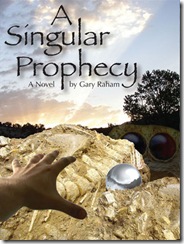
A Singular Prophecy

A Singular Prophecy
Gary Raham
Biostration, 2012

singularprophecy

70 million years ago, an alien race, fleeing the destruction of their world, landed on Earth. Here they would recreate the world they had lost. Unfortunately for them, Late Cretaceous Earth was a fiendishly hostile place, and it destroyed them. That is, it destroyed their bodies. Before they died, they used their technology to preserve their personalities in anticipation of the evolution of a more hospitable environment.

In our own time, a young paleontologist on a dig pries a sphere from the midst of fossil dinosaur bones and suddenly finds himself the host of one of those personalities. As they struggle to coexist in one body, the paleontologist and his not–so–welcome guest learn that the alien personality is not the only one to have reawakened. Moreover, the conversion of part of the earth into a recreation of the alien world that was lost so long ago is well under way.

A tale of alien possession and deep time becomes a moral struggle for both human and alien. The latter, especially, is forced to question its fundamental beliefs about the superiority of its kind and its presumed right to take over a world already inhabited by beings the alien finally recognizes as morally and intellectually on a par with itself.

The alien worldbuilding, told through flashbacks and the memories of the alien refugees, is simultaneously dreamlike and convincing. The biology of the aliens, and in particular their imaginative lifecycle, is shown to us mostly through their eyes, giving it a welcome solidity and realism. Too often in sf novels, such details struggle to rise above the level of intellectual exercise. One stage in the life cycle, the ambuli, we first see through the aliens’ memories. Later in the novel, we suddenly see ambuli through the eyes of humans, and instantaneously the ambuli become terrifying and very alien predators. Raham uses this technique of a double view of things very effectively.

For more information about Raham and his work and writing, see his Web site. To buy A Singular Prophecy, click on the image of the cover, above.

Tuesday, February 21, 2012

The Arm and Flanagan

My latest fiction publication. I'm putting it out as an e-book on Amazon, etc.

It's a novella or a very long story, or something like that. A mixture of suspense and sf, and hopefully Twilight Zoneish. It's just over 13,000 words. Publishing fiction of this length is something new for me. You can't charge less than 99 cents on Amazon, and I have no idea how people feel about paying a dollar for something of that length.

So far, The Arm and Flanagan is available in Kindle format on Amazon (http://www.amazon.com/dp/B007BQDG48), and also on Smashwords in various formats. It will be showing up in the other online stores over the next few weeks.

http://www.dvorkin.com/armflan/index.html

Monday, January 09, 2012

Red Riding Hood

I just watched part of the recent movie "Red Riding Hood" on TV.

I had no idea that all the girls in a typical medieval village were so hot. And had such nice teeth. The young male leads were also quite pretty, and it's even possible that some of them are heterosexual. It was a flop in the theaters, I believe; it should have been a CW series.

Gary Oldman chewed the scenery as a strange (of course!) priest. At one point, when looking for a witch among the villagers, he says that one of the signs to look for is a person exhibiting strange odors. Oh, Father. It's the Middle Ages.

Wednesday, December 21, 2011

Regressive Voice

Some years ago, I put an essay on my Web site titled Progressive Voice. It was a call for progressives to speak up and counteract the shrill volume of the right wing. I also said that progressives are the real Americans, and we have to make that clear to the country.

I’ve had the occasional supportive e-mail in response. Today I got one from the other side. It demonstrates just how dangerous the right wing really is:

David,

I glanced over your manifesto with complete shock.

Al I can say is Are you fucking kidding me?. You and any that think the way you do MUST be hunted down and permanently removed from Society.

Progressives are a cancer that has infected our great nation and MUST be eradicated.  YOU are the Enemy, YOU are the traitors YOU MUST be eliminated.

Sunday, December 11, 2011

Dust Net

Governments want to control access to the Internet in order to remain in power. Corporations want to control access to the Internet in order to make lots of money. Both of them can maintain such control only as long as citizens/consumers are forced to access the Internet through a relatively few bottlenecks. Those are the points where government can choke off access; those are the gateways for the use of which corporations can charge exorbitant fees.

Political activists in countries with repressive governments have devised ways ― e.g., dialup access to proxy servers― to bypass government barriers to Internet access. Direct communication with satellites is another possibility; this is already popular in some countries as a way to watch television programs the government disapproves of. However, for the foreseeable future, communications satellites will be under the control of governments and giant corporations, so they aren’t a reliable and untrammeled avenue to the Internet. Proxy servers depend on the existing Internet backbone, which merely moves the possibility of government/corporate control one step further away from the person trying to get online.

Technological evolution will continue to provide new ways to evade this control, and governments and corporations will continue to evolve ways to block each new avenue of evasion. But two particular evolutionary trends are coming that will change this warfare between offense and defense in a fundamental way. They will change society, too, in profound and disturbing ways.

The first evolutionary trend is the increasing miniaturization and power of Internet–connected video and sound recording devices. They’ll soon be undetectable. Police won’t be able to arrest people for recording them in the act of, say, abusing peaceful protestors because the police won’t know which bystander is recording them and instantaneously uploading the video to YouTube. The increasing availability of WiFi hotspots and Internet access via the cell phone network also means that there are ever fewer physical locations where such abuse can take place without recordings being made and uploaded.

Except, of course, inside police stations or secret CIA torture camps. But hold that thought.

The second evolutionary trend is the shrinking of computers.

Some day, nanocomputers will be part of the nanotechnology tidal wave that will overwhelm us with technology indistinguishable from magic. The world will change. Human beings will change. But we don’t have to look that far ahead to glimpse the sea change I’m talking about.

Perhaps the efforts to create quantum computers will succeed, bringing us immensely powerful computers smaller than a human cell. But even if that technology never does come to fruition, powerful small computers are inevitable. Maybe they won’t be smaller than a human cell. Maybe they’ll be as big as a human cell, or as big as a speck of dust. That’s small enough to do the job I have in mind.

Major steps have already been made in that direction. The US military, as well as a consortium of universities, has been working for at least ten years to develop smart dust ― clouds of microscopic machines, wirelessly connected to each other, able to perform military tasks, espionage, exploration, and rescue. The last two sound wonderful, but no doubt far more money and brainpower are being poured into the first two.

In any case, microscopic networked intelligent machines will soon exist. Then, smart dust will quickly evolve from networked microscopic sensors with some computing power into powerful, microscopic networked computers.

Within a few years ― ten at the most, but probably no more than five ― invisible clouds of such computers will be drifting in the winds and floating on the seas. They will be present almost everywhere in the world. They might be powered by sunlight, or the energy of wind or waves, or changes in barometric pressure, or they might draw all the power they need from the manmade microwave energy bathing all of us all the time. Many of them will be military devices, gathering intelligence, keeping watch on other countries and on citizens. Many will be corporate machines, gathering information designed to make very wealthy people even wealthier. These machines won’t need the Internet. They will form their own networks. Since I’ve described two categories of machines, let’s call their two networks Gov Net and Plutocrat Net.

Increasingly, mixed among these clouds of drifting, floating dust–speck computers will be others produced by small groups of individuals with no connection to government or to the corporatocracy. Technology, especially electronic technology, behaves that way. Neither the government nor big corporations can keep control of it for long.

This third class of dust–speck computers will constitute a third world–wide network far greater than today’s Internet. Let’s call it Dust Net. Its purpose won’t be repression or profit but access to data, opinion, and like–minded human beings.

At this point ― let’s say five to ten years from now ― all those who have smart phones or other WiFi–equipped devices, almost anywhere in the world, will have complete access to Dust Net. Their governments won’t be able to block them, and corporations won’t be able to charge them. Dust Net will be an immensely powerful force for freedom.

But something else will be happening at the same time.

Let’s return to the evolution of tiny recording devices. I believe that that technology will be integrated into the microscopic servers making up Dust Net and its government and corporate equivalents. Smart dust was intended for data collection from the start, so copious data storage capacity is inherent in the design of the machines. Dust Net will become an infinitely distributed, infinitely replicated, infinitely accessible database containing full sound and video recording of everything that happens everywhere on Earth.

Of course, the same will apply to Gov Net and Plutocrat Net. They’ll be watching, recording, and storing everything, too.

No place in normal life is truly dust free. It’s frightening to think that every moment of your life will be recorded, stored away, and accessible to anyone who cares to view the recording. We’ll be living in a global village where not only do none of the windows have blinds but all the walls are made of glass.

Fortunately, we’ll have Dust Net. While governments and corporations watch us, we’ll be watching them. There won’t be any more secret meetings in Washington, DC or anywhere else. Like it or not ― and they won’t ― plans by governments and corporations to control us and limit our freedoms will be out in the open and known to all of us ahead of time. All governments and all boardrooms will be truly and completely transparent.

They’ll try to fight Dust Net with dust–free rooms. But even if they go into those rooms naked, they’ll bring the motes of Dust Net in with them ― inside their ears, their noses, their lungs. They’ll try to destroy Dust Net by hardware or software methods. The immense redundancy and constant checking and comparing of data between dust motes should defeat both approaches.

Premeditated crimes will largely disappear. Spur–of–the–moment crime will be virtually certain to be punished. Graft, corruption, and collusion will largely disappear. So will the very concept of privacy. And all this is coming whether we like it or not.

“What are you doing here?”

This is a small thing, but it bugs me. It seems to be new, and the buggishness factor grows each time I hear it.

In TV shows, when Character A is surprised at encountering Character B doing something unexpected, A will say, “What are you doing here?”

So far, so good.

Much more commonly, the situation is that A unexpectedly encounters B in a place where B should not be. A should say, “What are you doing here?” Instead, A always says “What are you doing here?” Same emphasis as in the first situation, but completely inappropriate in the second.

It’s as if TV actors and/or directors only know one way to say that sentence, no matter what the situation is in the story. If only they’d spend some time thinking about such details instead of mindlessly churning out product, the world would be a slightly brighter place. And I’d be somewhat less bugged.

Yeah, I know. The economy is struggling to avoid a double dip, a band of Republican wackadoodles is slavering to be president and so dense is the American voter that Obama is not crushing them all in the polls by a margin of 99 to 1, the Middle East (that’s what I’ll always call it!) is bubbling even more than it usually does, climate change is upon us and accelerating even while those same wackadoodles deny its existence, etc., and I’m complaining about television actors placing the stress on the wrong word.

But that’s an argument against all blog posts that aren’t dreadfully serious and deep and penetrating and that don’t contribute to solving the world’s problems. Fret not. My next post is going to be long, dull, terribly serious, and it will radically change human society. I should be working on it now. I shouldn’t be here. What am I doing here?

Thursday, November 24, 2011

Obligatory Thanksgiving Day Thankfulness Post

Okay, I'll join the crowd and say what I'm thankful for. More to the point, since I’m an atheist and therefore don’t believe in a supreme being or other divine or supernatural force, I’ll say whom I’m thankful to.

I'm thankful to Leonore for my wonderful marriage and daily happiness. I'm thankful to a bunch of 17th and 18th century political philosophers for the system we live under. I'm thankful to Franklin Roosevelt and Lyndon Johnson for Social Security and Medicare. I'm relieved, rather than thankful, that the tides of politics have kept the Republican Party, that well of vileness, from destroying those two programs. So far.

Tuesday, November 15, 2011

Look. Up in the tree. It’s your brother-in-law.

I was collecting fallen, rotting apples from around our apple tree yesterday. It produces a lot, these days, so there are lots of them left on the ground, and they stink after they've been lying there for a few days. Many of them have been nibbled on, presumably by the swarms of squirrels and/or rabbits that infest our back yard. Maybe just the squirrels. Rabbits seem to prefer grass and vegetables. I've seen the squirrels holding apples and gnawing on them.

Lazy beasts. We give them free room and board and a big yard with trees, but they don't contribute a thing. You'd think they could at least collect the extra apples. Better yet, eat the whole thing and process it all into lawn fertilizer. It's like having a whole bunch of the world's worst brothers-in-law camped on your couch and drinking your beer and dropping the empties on the floor.

The rabbits all waddle around slowly. At least the squirrels are fun to watch. Slow movements don't seem to be in their DNA.

Thursday, November 03, 2011

Letter to Diana DeGette

Sent today.

Dear Congresswoman DeGette:

We are long–term residents of District One, having lived in Bear Valley since 1971, and we want to express our severe disappointment about your Yea vote on the recent House resolution concerning “In God We Trust” as the motto of the United States.

We can’t understand why you would support the Republican Party’s blatant pandering to ignorance and their continuing cynical, politically motivated misrepresentation of the nature of our country. We urge you to introduce a resolution to return our national motto to the original version, “E Pluribus Unum,” an inclusive and unifying phrase far more in keeping with the secular government the Founders created.

Sincerely,

David and Leonore Dvorkin
www.dvorkin.com
www.leonoredvorkin.com

Monday, October 31, 2011

Another Step Closer to Full Retirement

MileHiCon, our local science–fiction convention, was the weekend before last. The con always leaves me feeling like a real writer (as opposed to a poseur, which is how I tend to feel the rest of the time) and full of enthusiasm for writing. In the past, those positive feelings were tempered by the need to go back to my job on the Monday after the convention ended. Or back to looking desperately for a new job during my periods of being unemployed.

That should have been different during the last two years, a time when I’ve been referring to myself as retired. Except that I wasn’t really retired, not completely.

After I was laid off from Quark in May 2009, I signed up for Social Security as a backup, and I kept looking for a new full–time, permanent job. (Let’s put aside the absurdity of calling modern jobs “permanent”.) In the meantime, I picked up some contract work, both tech writing and Web development. At some point during 2010, I accepted the fact that thanks to the economy and my age, a new full–time, permanent job was extremely unlikely. I also knew, or perhaps admitted to myself, that I really didn’t want one. Instead, I decided that I would keep on looking for contract work, as close to full time as possible.

So, just as I had been doing since being laid off, every day I did the Monster/Dice/Indeed/Craigslist/etc. thing, sending out zillions of resumes, getting some responses by e–mail or phone, going for some interviews –– working almost full time at getting full–time work. I was looking for contracts, but it was no different, in terms of time and psychological investment, from looking for a permanent job. As a result I continued to feel that writing was something temporary, and that time spent doing it was a vacation from reality. On some level, I thought that time spent writing was self–indulgent and self–deception. Nonetheless, just as I did for all those decades–that–felt–like–centuries when I was working full time, I kept daydreaming of the big hit book that would free me from any necessity to work and would convert me into an actual, genuine full–time writer.

I began to burn out on the emotionally draining job search. The return was too small for the investment, which was my life. Bit by bit, I reduced the amount of looking. I dropped some job list Web sites from my search, and I unsubscribed from various e–mail job listings. I also spent some time reissuing my old, previously published novels as e–books. Eventually I self–published my new books the same way. (Naturally, I track the monthly sales of all these e–books in a spreadsheet, with cool line graphs, and I get depressed when the lines dip and elated when they rise.)

I’ve continued to pick up the occasional contract job. Some have been Web development contracts; I do that work at home on my own computer. Others have been technical writing contracts. The writing jobs require spending the working days at the client’s office. Both Leonore and I hate those periods. Of course I worked in offices away from home at a succession of regular, full–time jobs for decades, but the more than two years we’ve spent together, all day and every day –– finally living the life we assumed we’d be living when we got married 43 years ago –– have made us both hate being apart at all now.

No, I don’t mean that we spend our days jammed side by side in a love seat. We have separate studies and separate work. But being together in the house, able to talk to each other whenever we want, able to take long walks together, able to go out to a movie or a restaurant, seems natural. It’s the way we set out to be, and it’s the way the Universe intended the two of us to be.

Except when I go off to do some technical writing somewhere. And except for the times when I’m thinking of the next job away from home or recovering from the effects of the last one. Those effects seem to be worse and to take longer to dissipate each time.

So. Back to MileHiCon.

For various reasons, this year’s con (number 43, the same number of years that Leonore and I have been married) left me feeling even more filled with writerly energy and enthusiasm than in previous years and more optimistic about my writing career than I have for a long time. A flurry of e–book sales, starting on the last day of the con, helped a lot.

Leonore also enjoyed the con and came away feeling more optimistic about our future. On the morning of the last day of the con, October 23, she said something to me that she had been wanting to say for some time. It finally seemed to her to be the right time to say it. She repeated how much she hates having me working away from home, and she said that she really wanted me to no longer accept any contracts other than short ones that I can do by telecommuting. She knew (because she’s always been uncannily able to read my mind) that I had wanted to take this step for a long time but that I would feel guilty if I did so because it would mean turning down the extra income. She told me that rejecting non–telecommuting contracts would not constitute self–indulgence and laziness and selfishness (reading my mind again) because writing is my job, my real job.

I felt suddenly relaxed and calm. Some inner tension I hadn’t realized was there went away immediately. I knew that she was right about taking this step; it was the right step and the right time. This was the right move, an exceptionally good move, and as is usually the case when something exceptionally good happens in my life, I have Leonore to thank for it.

Perhaps you think that I’m making too much of this. After all, I’m not yet talking about full retirement –– or rather, full–time writing –– but simply a step in that direction. But it’s a very major step because it removes the aspect of our situation that was stressing both of us the most before, the periods of separation and the knowledge that more such periods were ahead of us. That’s gone now, completely and permanently.

As for the money -- well, maybe the book I’m working on now will replace that. Or even more than replace it. And if not that book, then maybe the next one. Or the one after that. And so on, from now on.

Wednesday, October 26, 2011

Those Awful Self-Published Books

A couple of weeks ago, on his excellent blog, Nathan Bransford asked the following question: Have You Ever Read a Self-Published Book? In addition to answering the question, he invited his blog readers to say whether they liked the book(s) in question and whether they would read more self-published books.

The responses, in the comments section, ran the gamut and include positive entries from people who have themselves self-published. I didn’t do a count, but I think most of the comments were negative. Some repeated the condescending putdowns that have become standard whenever self-publishing is discussed. Here’s a good example:

I read a self-published novel … once….

It was horrible.

When I shop for novels I look inside at the publisher, and if I don't recognize the name, I google it. If the book is self-published, it's a major turnoff.

Sorry, but I think gatekeepers are a good thing.

Gee. I’ve read at least one book published by a major publisher that I thought was horrible. I guess that means they all are.

We all know that major publishers ne-v-v-v-er publish bad books. “Bad” is subjective, of course. The prose in any book lavishly praised by literary critics will make some readers shake their heads and laugh at the abominable quality of the writing. The same is true of any bestselling book scorned by critics, although it’s probably truer for books in the first category than for those in the second. Based on my frequent reaction to books in both categories, I can only say that, in my opinion, well known publishers spew out great quantities of bad-to-abominable books.

In fact, I have read parts of self-published books that I considered very bad. It could well be that if I read a huge number of self-published books, I’d conclude that they are more likely to be bad than are books published by established publishing companies. But that’s because I’ve absorbed the same general standards of literary judgment that editors and most readers have. At base, those standards are simply matters of opinion. They can’t be justified in some objective way. They are not laws of nature, no matter how many people have been educated – trained, brainwashed – into agreeing with them. Moreover, they are transitory. They’ve changed greatly in the past and continue to change. Self-publishing – all those “bad” books – is blowing those subjective standards, those mere matters of opinion, to bits. Protest and condemnation will not stop or even slow this process. This is a tide that no one can stem.

I’ll return to this point in a moment.

What about the physical quality of self-published books? No doubt the appearance, layout, covers, and proofreading of the product turned out by big publishing companies are higher and more consistent than is the case with self-published books. Major publishers are far from flawless, but of course they have more people providing quality control than does a writer publishing his own book, and so their error rate is bound to be lower. If a low error rate is your main criterion when choosing reading material, then you should avoid self-published books. I can’t imagine why this would be anyone’s main criterion when choosing what to read, but there have always been people who prefer presentation to content, appearance to substance.

Okay, but what about covers? Shouldn’t the outside of the book at least be attractive? Look at any large number of self-published books, whether e-books or printed books, and you’ll see a few clumsily designed covers and a lot of beautiful ones. Moreover, you’ll see more imagination and originality than you will with books published by major publishers. Self-publishers may create they own covers or they may hire freelance cover designers to do it for them, but in either case, they’re not bound by the guidelines and limitations enforced by a publishing company’s marketing department.

Let’s return to the issue of editing, of the presumed necessity that a book’s prose be modified by a professional editor so that it conforms to the rules of grammar and spelling. This is done to increase the book’s chances of selling well. Editing is not done for art but for commerce.

Because of financial pressures and cutbacks at publishing houses, there’s less such editing being done now than in the past. Moreover, bestselling authors tend to be edited lightly or not at all. And yet they continue to be bestsellers. Why? Because the public likes their writing styles and the stories they tell, and the public doesn’t care about grammatical lapses. In which regard, those writers are no different from self-published writers who hit it big.

Some of the editing done at major publishers is very good. Some of it is quite awful, as many published authors can attest (especially after a few drinks). Even if it were all good, even if the published version of every book were far, far better than the version submitted by the author, that should bother you as a reader. It should bother you to think that, if honesty and transparency prevailed, the bestselling novel Catchy Title by John Smith would be listed as a collaboration credited mostly to the editors and with John Smith listed at the end of the credits under Story Idea by.

Excellent editors and cover designers aren’t limited to major publishing companies. Self-published authors can hire freelancers to edit their manuscripts and/or create covers for them, and many of them do exactly that – with generally better results, I’m convinced, than if the same work had been done for them behind the wall of a big publisher. Where will you find such editors and cover designers? You could start by looking here.

Don't assume that all self-published books are new books being put out by new and inexperienced writers. In fact, many of them are reissued books, revitalized versions of books that were previously published by mainstream, traditional publishers. The lifespan of traditionally published books is short. In the past, authors got the rights to their old books back and tried to find a small publisher to reissue them, usually without success. Nowadays, authors are turning to self-publishing to reissue those books that were previously languishing in a sort of literary limbo, often available only as used copies, which earn the author nothing. These reissued books can be put out either in e-book or print format, from places such as Smashwords and CreateSpace. Then they can earn the author much higher royalties than before, up to 80% of the cover price. This is especially appealing to authors like me whose careers receded into limbo along with their old books.

This is giving me and other previously published authors a great deal of new hope and energy. But what is at least as important is that the authors can now change the previously published texts to suit themselves, free from the interference and inferior judgment of the editors at the traditional publishing houses, who often took it upon themselves to change things as fundamental as the title that the author wanted. In my own case, I have been able to change the text of several of my books to bring them back in line with what I first wanted but was forced to change prior to publication. Not only is the new version the book I actually wrote, but also it’s superior to the version that was published before by the big publisher. The editing done by the publishing house didn’t improve the book; quite the opposite.

I have also been able to create my own cover designs, a process I much enjoy. You can find my creations thus far here.  

Free of all the old editorial bullying and restrictions, I am now getting the last laugh, as well as almost all of the new revenue from sales. I'm also selling many more books in e-book format than I had been selling in print format for the past several years.

Note, too, that many of the great literary classics of long ago were in effect self-published books, or at least author-edited ones. Who knows how much such works would have been harmed and diminished if today’s inspiration-stifling publishing establishment had been in place back then?

The post on Nathan Bransford’s blog to which this is a response was about self-published books in general, but because of the continuing explosion of self-published e-books, and because the rise of e-books has opened self-publishing to far more people than would have considered that avenue before, I look at his question and the commenters’ answers as really, or mostly, applying to self-published e-books. The e-book revolution, or tsunami, is upon us, and that’s the form of self-publishing that really matters now.

That tsunami will do more than destroy the publishing companies that dominate print publishing. It will change the nature of writing itself, especially fiction. This is the real importance and wonder of the great change now underway. This is also the subject of my own most recent e-book, a very long essay titled The Dead Hand of Mrs. Stifle. Check it out. By which, of course, I mean buy it.

Saturday, June 25, 2011

How to keep summer from getting hot

This morning I put on sandals and shorts from the first, instead of starting with jeans and running shoes and changing later. I'm facing reality: it's gonna be hot.

I realized that every summer, I delay doing this because of a kind of magical thinking -- that if I put on warmer clothing in the morning, that will fend off the heat.

Now you must excuse me. There's a voodoo doll calling for my attention.

Sunday, June 12, 2011

Making money from homeopathy

Thanks to an online discussion about TV ads for homeopathic remedies (a.k.a. “remedies”), a way to make money from the manufacturers of these scams suddenly occurred to me.

Okay, forget the “scam” part. This only applies to those manufacturers who believe that their products actually work – that the theory underlying homeopathy is valid instead of absurd.

It occurred to me that such manufacturers should be willing to pay for commercials that aren’t aired at all.

It’s a bit more complicated than that. The unaired commercials will only work if they are properly prepared. Let’s call this process of preparation the dilution phase.

First, a commercial is scripted and filmed. Then it’s integrated into the TV program in preparation for broadcast. Let’s say that a complete video of the program, including the commercial, is shown on a TV set in the … lab. Let’s call it a lab. This version isn’t aired. Instead, the length of the commercial is cut and the video is shown again. This step is repeated until the length of the commercial is reduced to zero minutes. Clearly, the commercial’s message remains embedded in the TV program by way of its effect on the program’s vibrations – the TV signal. An electromagnetic field has a memory that’s even more powerful than that of water.

As you can see, this is already sounding more scientific and technological than homeopathy.

But that’s just the first step. I can offer something even better. If those manufacturers pay me enough, I will guarantee not to broadcast their commercials at all on the TV station I don’t even own. Clearly this would make the effect of their commercials even more powerful. These ultimately diluted commercials would drive consumers to buy those homeopathic medicines in huge numbers. My fee for pulling off this powerful effect would be only moderately exorbitant.

As an aside, it occurs to me that both the manufacturers and the retail outlets should be able to increase the income from sales of homeopathic remedies even more by stocking the shelves with those medicines and then, a few packages at a time, removing them till there’s no visible sign of them. The vibrations will remain in the shelves’ memory. Surely if water, a fluid, has a memory, then a solid should have an even stronger memory, or at least a more stable one.

In any case, it’s clear that, soon after I begin not broadcasting their commercials on my non-station, the manufacturers will be rolling in dough. They might want to experiment with increasing the potency of their newfound wealth by opening new bank accounts, then closing them down, and returning any checks from distributors, wholesalers, and retail outlets.

However, since I know that homeopathy is bullshit, I won’t start not airing their commercials on my non-station until their actual, physical checks clear my actual, physical bank.

Monday, June 06, 2011

Palindrones

Let's use that name for Sarah Palin's followers. Has anyone suggested that name before?

I like the "drone" part, and I like how close it is to palindrome, since they don't seem to know face from rear.

Wednesday, May 11, 2011

Technological predictions from the past

Some accurate, some not:

http://www.money.co.uk/misc/technological-prophecies.htm

The article misses here and there.

It mentions Vannevar Bush and the Internet but not H. G. Wells’ prediction of the Universal Encyclopedia, which was sort of Google, made some decades before Bush.

It also refers to a woman in the background in an old movie, holding what appears to be a cell phone. That one has been debunked.

Tuesday, March 22, 2011

The Dead Hand of Mrs. Stifle

It's not a horror story.

A while ago, I set about writing an essay/blog post about the ways I think self-published e-books are changing not just the business of publishing but the nature of published fiction. It's the latter part that I think is important and long-lasting.

The essay grew and grew. I ended up publishing it as a shortish (okay, short) e-book. Which seems appropriate to me, given the subject matter. That's an experiment for me. Everything else I've published as an e-book was standard book length. Short e-books at even lower prices than standard-length e-books seem to be popping up more and more. That's an interesting development in itself, I think.

Details here: http://www.dvorkin.com/stifle/

Friday, March 11, 2011

Mischievous Time Traveler

Imagine the reaction if some mischievous time traveler had dropped this paragraph, from today's Eurekalert, into a popular science magazine fifty years ago:

Oxford Nanopore will collaborate with Harvard University for the development of graphene for DNA sequencing. Graphene has remarkable electrical and physical properties; it is a single atom thick sheet of carbon with very high conductivity. By piercing a nanopore in graphene it may be possible to use this material to analyze DNA at a very high speed and low cost.

Monday, March 07, 2011

Business macho suckers

You’ve probably run into these people. You may even be one of them.

“I work at least 60 hours each week,” they brag. “Sometimes I work 12 hours a day, seven days a week. I never take a vacation. My kids don’t recognize me. The dog thinks I’m a stranger and barks at me.”

The subtext is, “What a stud I am!”

The reality is, “What a sucker you are.”

It’s the modern, corporate version of machismo. (Is there a machisma flavor, too? I assume so, but I haven’t encountered it.)

Dig down, and there’s something much more sinister than machismo. These workers are exhibiting the mentality of the medieval serf who thought he was in the role that God had intended for him and that his noble masters deserved to live in a castle and profit from his labor because that was the role God had ordained for them. His noble masters agreed.

Some of these modern serfs think the system is fine because if they work hard, adhere to most of the rules while bending the right ones, play the game, and have just a bit of luck, then some day they’ll be living in the castle themselves. Indeed, a few of them will ascend to the halls of the nobles. Even in the Middle Ages, there were rare cases of people rising from the lowest rungs of the social ladder to the upper ones. It was rare, but it did happen. But that didn’t make the institution of serfdom any less evil.

Of course modern times are different from the Middle Ages. After all, we don’t have inherited titles, and today’s serfs aren’t legally tied to the land.

I’m sure the plutocrats are working on that.